

November 05, 2024

International Mother Language Day 1952: A Legacy Written in Blood
The Background: Why the Movement Began
After the creation of Pakistan in 1947, the government declared Urdu as the only state language, even though the majority of the population spoke Bangla. This decision sparked widespread dissatisfaction in East Pakistan.
Language is more than communication—it is culture, history, and identity. The people of East Pakistan strongly believed that Bangla deserved equal recognition as a state language.
The demand for Bangla grew stronger through protests, political movements, and student activism, particularly at the University of Dhaka.
February 21, 1952: The Day of Sacrifice
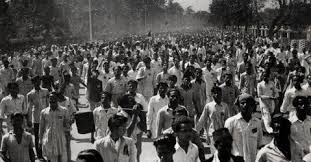
On February 21, 1952, students gathered in Dhaka to protest against the government's decision and demand recognition of Bangla as a state language. Despite Section 144 (which banned public gatherings), they marched peacefully.
Police opened fire on the protesters.
Several students were killed, including:
-
Abdul Jabbar
-
Abul Barkat
-
Rafiq Uddin Ahmed
-
Abdus Salam
-
Shafiur Rahman
Their sacrifice deeply moved the nation and intensified the movement.
Recognition of Bangla
The protests continued, and in 1956, Bangla was finally recognized as one of the state languages of Pakistan. The Language Movement became a foundation for future resistance movements, eventually leading to the Liberation War of 1971 and the independence of Bangladesh.
From National Mourning to Global Recognition
In Bangladesh, February 21 is observed as Shaheed Dibosh (Martyrs’ Day). People visit the Shaheed Minar to pay tribute to the martyrs with flowers and silent respect.
The significance of this day crossed national borders when, in 1999, UNESCO officially declared February 21 as International Mother Language Day. Since 2000, the day has been observed worldwide to promote:
-
Linguistic diversity
-
Multilingual education
-
Preservation of endangered languages
-
Cultural harmony
Why International Mother Language Day Matters Today
Today, thousands of languages around the world are at risk of disappearing. When a language dies, a part of culture and heritage disappears with it.
International Mother Language Day reminds us:
-
To respect and preserve our native languages
-
To value cultural diversity
-
To promote education in mother tongues
-
To stand against linguistic discrimination
Conclusion
The events of February 21, 1952, prove that language is not just words—it is identity, pride, and freedom. The brave students who sacrificed their lives did more than protect Bangla; they inspired a global movement for linguistic rights.
International Mother Language Day is not only a tribute to the martyrs of 1952 but also a reminder to the world: Every language matters. Every voice deserves to be heard.
Comments (4)
D
dwaGVjnHeOnTCzCj
iLQcEfxmXRipTaitOHcs
G
gjuljuynCaWEvpYZqSJOhB
YiWzbcyeIZagOkTJX
A
AUdFtIpRgOkXgeqYwx
qLGMrHzmrbivMQqMZO
T
Test
Test comment
Related News
December 16, 2022
Leave A Comment