

August 04, 2025
International Mother Language Day 1952: A Legacy Written in Blood

The Liberation War of 1971 stands as one of the most defining and emotional chapters in the history of Bangladesh. It was not merely a war for territory—it was a struggle for identity, language, democracy, and dignity. The nine-month conflict ultimately led to the emergence of Bangladesh as an independent nation on December 16, 1971.
To understand the Liberation War, we must go back to 1947, when the Indian subcontinent was partitioned into India and Pakistan. Pakistan was created in two geographically separate parts: West Pakistan (present-day Pakistan) and East Pakistan (present-day Bangladesh), separated by more than 1,600 kilometers of Indian territory.
Despite having a larger population, East Pakistan faced:
Political marginalization
Economic exploitation
Cultural and linguistic suppression
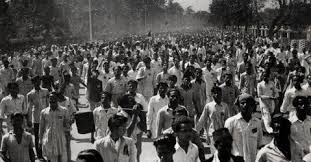
The first major spark came with the Language Movement of 1952, when the people of East Pakistan demanded recognition of Bangla as a state language.
Tensions escalated after the 1970 general election, in which the Awami League led by Sheikh Mujibur Rahman won an overwhelming majority. However, the ruling authorities in West Pakistan refused to transfer power.
On the night of March 25, 1971, the Pakistan Army launched Operation Searchlight, a brutal military crackdown in East Pakistan. Thousands of civilians, students, and intellectuals were killed.
In the early hours of March 26, 1971, Sheikh Mujibur Rahman declared the independence of Bangladesh, marking the formal beginning of the Liberation War.
The people of Bangladesh rose in resistance. The freedom fighters, known as the Mukti Bahini, organized guerrilla warfare against the Pakistani military. Ordinary citizens—farmers, students, workers, and women—joined the struggle.
Key features of the war included:
Guerrilla attacks by Mukti Bahini
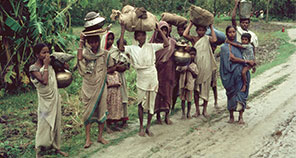
Mass displacement and refugee crisis
Widespread atrocities against civilians
Growing international attention
Neighboring India provided crucial support to the Bangladeshi resistance. Eventually, in December 1971, India formally entered the war against Pakistan.
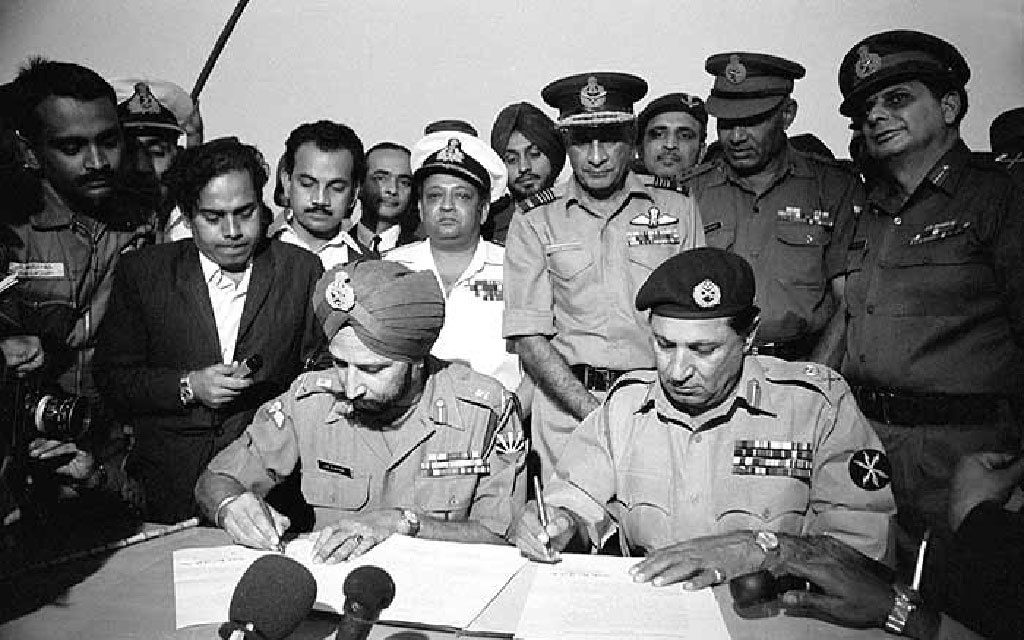
The war reached its climax on December 16, 1971, when the Pakistani forces in East Pakistan surrendered to the joint command of the Indian Army and Mukti Bahini in Dhaka.
This historic victory resulted in:
The birth of Bangladesh as an independent state
The end of Pakistani rule in the eastern region
International recognition of the new nation
December 16 is now celebrated as Victory Day in Bangladesh.
The Liberation War came at an enormous human cost. Millions were displaced, and countless lives were lost. The conflict left deep scars but also forged a strong national identity rooted in sacrifice and resilience.
Today, the war remains central to Bangladesh’s national consciousness. It symbolizes:
The triumph of justice over oppression
The power of unity and cultural identity
The enduring spirit of freedom
The Liberation War of 1971 was more than a military conflict—it was a people’s revolution. Through immense sacrifice and unwavering determination, the people of Bangladesh secured their right to self-determination.
As generations pass, remembering the events of 1971 is essential—not only to honor the martyrs but also to preserve the values of freedom, democracy, and national pride that gave birth to Bangladesh.
December 16, 2022
Leave A Comment